When someone asks AI for an injury lawyer in your city, are you the answer — or is your competitor?
When someone in your city asks ChatGPT or Google's AI "who's the best personal injury lawyer near me," does your firm come up? For most firms the answer is no — the AI names three or four others, and the prospect never sees a list to choose from. They just call the firm it named.
Before we talk, we map your market across ChatGPT, Claude, Perplexity, and Google's AI. On the call you'll see the exact queries where AI names a competitor instead of you — and why.
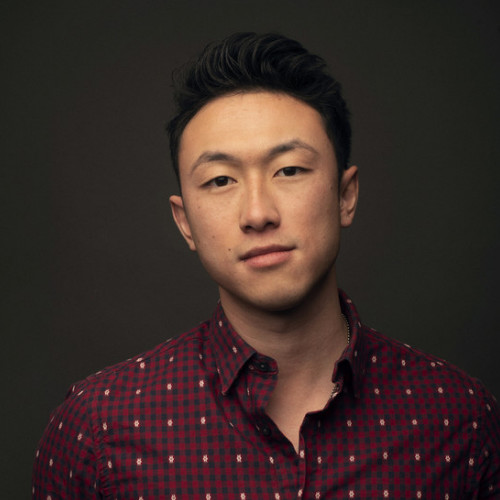
Victor Xu
Founder of SIGNALS · Last updated: June 2026
Here are a few well-regarded personal injury firms in Dallas:
Stop fighting for "best injury lawyer." Win the cases worth six figures.
Everyone's fighting over the one query everyone knows. Meanwhile the high-value queries — the ones attached to the cases actually worth taking — sit wide open.


Real AI visibility scan — San Antonio personal injury market. Based on a sample of AI responses across ChatGPT, Perplexity, Claude, and Google AI Overview.
Only about 1.2% of local businesses get named by AI.
That's the share named for local queries across the board (SOCi, 2026). For law firms the math is steeper than almost any other business — a single matter can be worth thousands in fees. Run it with your own numbers: if your average matter earns you, say, a few thousand dollars (just an illustrative figure, not a quote), even a handful of AI-referred clients a year makes being the named firm worth far more per citation than in any other vertical.
Ten blue links became a short list.
For twenty years, finding a lawyer meant ten blue links and a page of ads to outbid. Now the firms that win aren't the ones ranking #4 on Google — they're the ones the AI actually names.
Four AI engines. Four different sources.
Your SEO agency optimizes for Google. But the person asking Claude is getting answers from Brave's index, and the person asking ChatGPT is getting them from Bing — ranking #1 on Google does nothing for either. Claude reads Brave, ChatGPT reads Bing, Perplexity blends its own index, and Google AI Overview reads Google. We cover all four. Most legal marketers don't even know they're separate.
Being readable isn't the same as being chosen.
Table stakes
Can AI read you?
Before AI can recommend you, it has to be able to parse your site at all. JavaScript-only pages, missing structure, no schema — most firm sites fail here before the conversation even starts. This is the floor, not the finish line.
Where cases are won
Does AI choose you?
Even when AI can read you, it names just a few firms — and most never make that shortlist. That choice comes down to whether your site speaks your clients' language, whether you're cited across the web, and whether you've claimed the specific queries that carry six-figure cases. This is the work — and it's where we focus.
Three jobs. One outcome: AI names you.
We fix the technical floor — structure, schema, clean extraction — so the AI engines can actually parse your site instead of skipping it.
Buyer-language pages and third-party presence built around the high-value queries, so the AI chooses your firm for the cases worth six figures.
Ongoing monitoring across ChatGPT, Claude, Perplexity, and Google AI Overview showing which queries name you — and which still name a competitor.
AI names a few firms. Most never make the list. We work with one firm per city.
We work with one firm per practice area, per city. Once we build your position, a competing injury firm in the same market can't hire us — the same conflict rule your own firm runs on. AI names only a few firms per query, so the position is genuinely limited. If your market's still open, we'll tell you on the call.
See where your firm stands — and what to do about it.
A free 20-minute call. We map your market before we talk, so it isn't a pitch — it's a read on where you actually stand: the queries that name a competitor instead of you, and why.
Questions you're probably asking
Why doesn't my law firm show up when someone asks ChatGPT for a lawyer?+
Because AI doesn't return ten links — it names three or four firms and stops. If your site is hard for AI to parse, or you aren't cited across the sources AI trusts, you get left off that short list. Most firm sites were never built to be read and chosen by AI, so they're invisible at the exact moment a prospect decides who to call.
Isn't this just SEO? My firm already pays for that.+
No — different index, different signals. Your SEO agency optimizes for Google, but Claude answers from Brave's index and ChatGPT from Bing's. Ranking #1 on Google doesn't transfer to either one. Being named by AI depends on structured, quotable content and citations across the indexes AI reads — not on the blue-link ranking factors your current SEO is built around.
How is being named by AI different from Google Maps and the local pack?+
The map pack shows a list you still choose from — AI usually doesn't. It names a few firms in a sentence and the prospect calls one, often without ever seeing a competitor. Maps rewards proximity and review count; AI rewards whether your content is structured, quotable, and cited across the sources it pulls from. Different game, different signals.
How long until my firm shows up in AI answers?+
Usually a few weeks — that's how long the AI engines take to re-crawl your site and pick up the changes. But it's ongoing work, not a one-time fix: roughly 74% of the sources AI cites rotate week to week (SISTRIX, 2026), so staying named means continually earning and refreshing the signals that put you there.
What does "one firm per city" actually mean?+
We take one firm per practice area per city. If we build your position for personal injury in your market, we won't take a competing injury firm in the same city — the same conflict rule your own firm runs on. AI names only a few firms per query, so the position is genuinely limited; if a competitor signs first, we'll tell you straight that your market's taken.
Do you guarantee my firm gets cited?+
No — and anyone who guarantees AI citations is lying, because no agency controls what a model outputs. What we do control is the structural reasons you're skipped: we remove them, build real authority across the indexes AI reads, and prove movement every month. We stack the odds honestly — that's the most anyone can truthfully promise.
Victor Xu
Founder of SIGNALS
Victor founded SIGNALS, where he built PULSE — the share-of-voice scanner that tracks how often AI engines name your firm — and the seven-signal citation framework behind every engagement. Connect on LinkedIn →